
Winter Eye Care Essentials





Winter 2025–26 Collection
Winter Eye Care Essentials
"Cold air outside, dry heat inside—your eyes feel it first."
Canadian winters create a perfect storm for dry, irritated eyes. Forced-air heating strips moisture from indoor air while cold winds trigger reflex tearing and lid inflammation. This collection targets seasonal triggers with products chosen for how they work, not just what they promise.
Why Do My Eyes Burn More in Winter?
Indoor humidity in Saskatchewan can drop below 20% when the furnace runs constantly. Your tear film evaporates faster than your eyes can replenish it, leaving the corneal surface exposed and irritated.
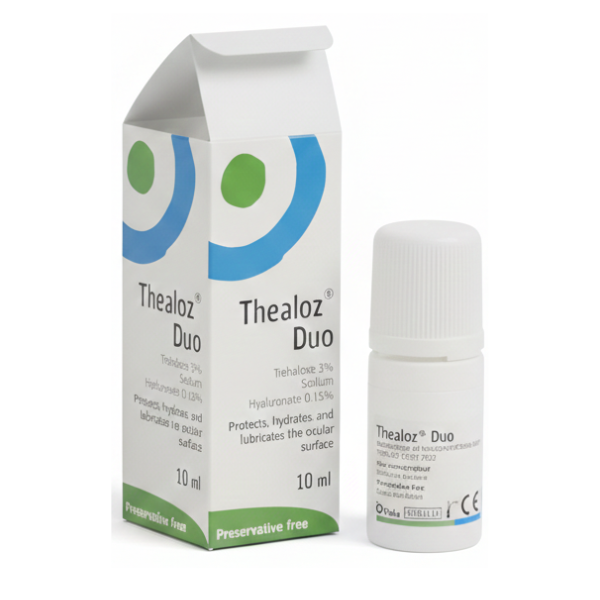
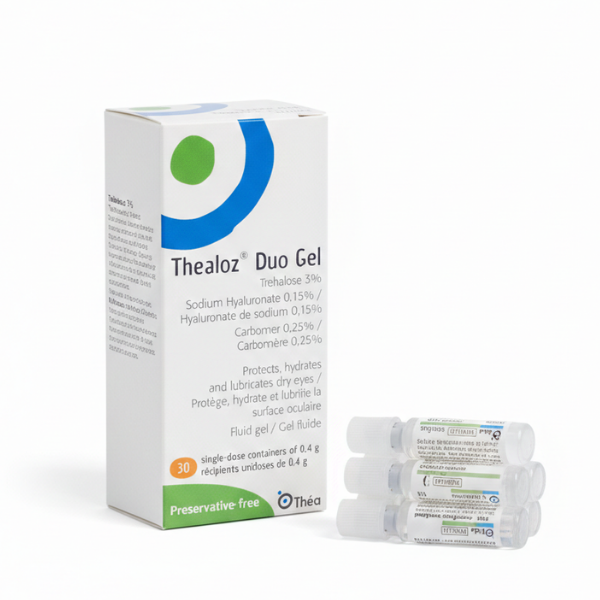
Trehalose-based drops like Thealoz Duo do more than add moisture—the Trehalose molecule forms a protective barrier over corneal cells, shielding them from desiccation stress even in bone-dry air.
Why Does Cold Weather Clog My Oil Glands?
Cold outdoor air thickens the natural oils (meibum) in your eyelids. When meibum becomes sluggish, your tear film loses its protective lipid layer and evaporates too quickly—even indoors.
A warm compress like the Bruder Mask delivers consistent, moist heat that softens hardened oils and restores natural flow. Use it 8–10 minutes before bed for best results.
What Should I Use for Winter Dry Eyes?
| Problem | Solution | Product |
|---|---|---|
| Daytime dryness & burning | Protective lubricant with Trehalose | Thealoz Duo |
| Clogged oil glands / lid discomfort | Moist heat therapy (8–10 min) | Bruder Mask |
| Overnight dryness / waking with grit | Thicker gel that lasts through sleep | Systane Gel Drops |
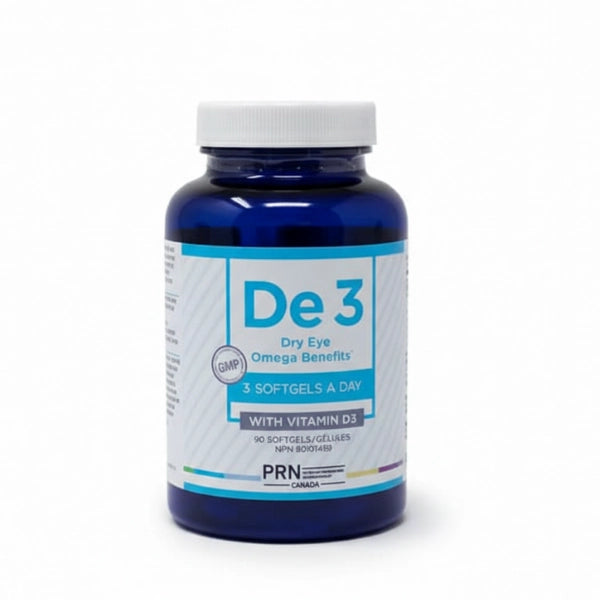
| Chronic inflammation / long-term support | Omega-3 (rTG form for absorption) | PRN Omega-3 |
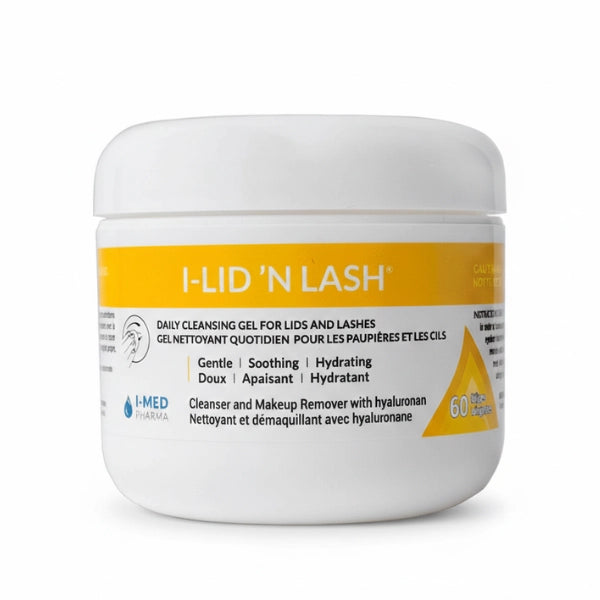
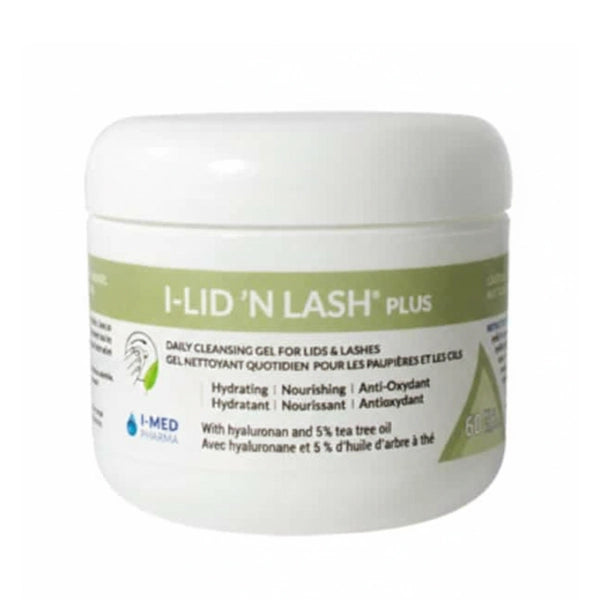
| Lid margin buildup / blepharitis | Daily eyelid hygiene | I-Lid 'n Lash |
Quick Winter Survival Tips
- Add a humidifier to your bedroom—aim for 40–50% humidity
- Point car vents away from your face (direct heat = instant evaporation)
- Blink deliberately when working on screens in heated rooms
- Use gel drops at night if you wake up with gritty, stuck-together eyes
- Warm compress before bed to keep oil glands flowing overnight
Winter Eye Care FAQs
Can my eye drops freeze during shipping in winter?
Most lubricating drops should be stored at room temperature (15–25°C). If your drops froze during shipping or in your car, check for cloudiness or separation before use. Preservative-free vials are more sensitive to temperature changes. When in doubt, contact us for a replacement—we'll make it right.
Why are my eyes worse indoors than outside in winter?
Forced-air heating dramatically lowers indoor humidity—often below 25%. Your tear film evaporates faster in dry air, even though cold wind feels harsher on your face. A bedside humidifier and overnight gel drops can help restore moisture while you sleep.
How often should I use a warm compress in winter?
For maintenance, once daily (usually before bed) works well. If you're experiencing significant discomfort or visible lid margin redness, twice daily—morning and evening—can help restore oil flow more quickly. Each session should last 8–10 minutes with consistent heat.
Should I use thicker drops at night during winter?
Yes—if you wake up with gritty, uncomfortable eyes, a thicker gel formula like Systane Gel Drops provides longer-lasting protection overnight. Your eyes don't blink during sleep, so moisture evaporates faster, especially in heated bedrooms.
Content reviewed by Dr. Davinder Sidhu, Optometrist (BC).
TheGenuwineOD.com · Instagram · Facebook
