
Eye Drops






Why Preservative-Free?
Most drops at Shoppers or Rexall contain benzalkonium chloride (BAK) which keeps the bottle sterile, but it builds up on your cornea every time you use them. If you're putting drops in four or five times a day, or wearing contacts on top of that, the preservative itself starts causing the irritation you're trying to fix. Preservative-free is the clinical standard for anyone using drops regularly. Not a preference.
Quick Symptom Guide
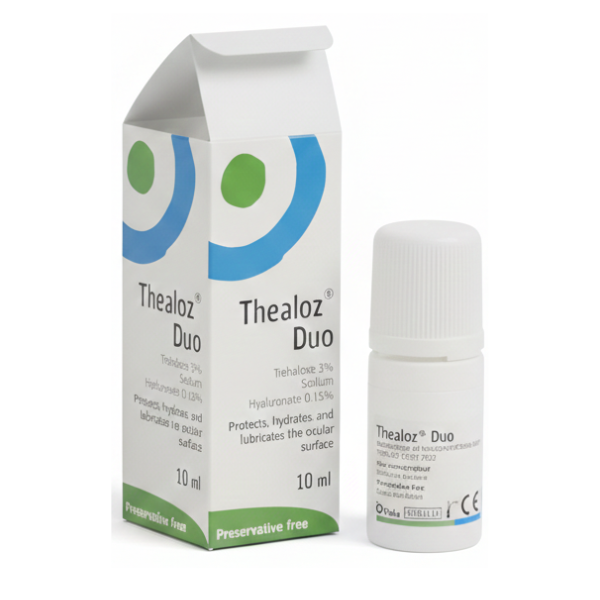
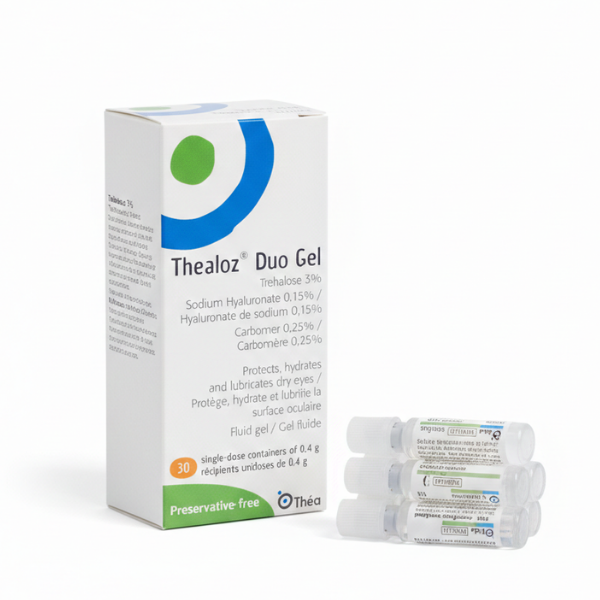
Watery eyes that burn? Because the lipid layer is failing, not a lack of tears. Thealoz Duo provides hydration and protection. That Gritty or sandy feeling? Hyaluronic acid drops like Hylo coat the surface and hold moisture longer. Waking up with your eyes stuck shut? A gel like Thealoz Duo Gel before bed stays put while you sleep.
The ingredients are more important than the brand name. Here you'll find options for mild dryness, moderate symptoms, nighttime relief, and a spray if you struggle with drop application.
How These Drops Compare
| Product | Key Ingredient | Best For | Duration | Contact Lens Safe |
|---|---|---|---|---|
| Thealoz Duo | Trehalose combined with hyaluronic acid. The trehalose forms a protective layer over damaged corneal cells while the HA holds moisture underneath. | Moderate to severe dry eye, especially if you have meibomian gland issues. This is the drop most Canadian optometrists reach for first. | About 4 to 6 hours, though it can fade sooner in very dry or heated indoor air. | Yes |
| Hylo | Sodium hyaluronate at 0.1%. A straightforward HA drop without extra ingredients layered on top. | Mild to moderate dryness. Good daily maintenance if your symptoms are mostly afternoon grit and screen fatigue rather than constant burning. | 2 to 4 hours depending on severity. | Yes |
| Thealoz Duo Gel | Same trehalose and HA base as regular Duo, but thickened with a carbomer gel so it stays on the eye much longer instead of draining off. | Nighttime use, or anyone with severe dryness who needs something heavier than a standard drop. Put it in right before bed. | 6 to 8 hours. Built to last through the night. | No. The gel blurs vision for a bit, so use at bedtime with lenses already out. |
| Zaspray | Liposomal spray. The lipids sit on your closed eyelid and work their way into the tear film when you blink. | Meibomian gland dysfunction and lid margin therapy. Also a good option if you physically cannot put drops in your eyes, whether that's a dexterity issue, anxiety about things near your eyes, or just age. | About 2 to 3 hours. | Yes. You spray it on closed eyelids, so contacts aren't a factor. |
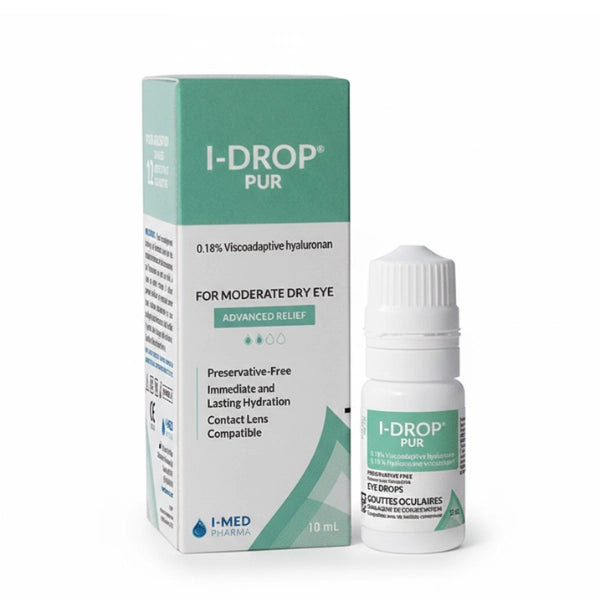
| I-Drop Pur | Viscoadaptive hyaluronic acid. It thickens when your eye is still and thins out when you blink, so it adjusts to what you're doing throughout the day. | All-day comfort and contact lens rewetting. Patients who wear dailies tend to prefer this one because it doesn't blur or feel heavy on the lens. | 3 to 5 hours, though the viscoadaptive formula can feel effective longer during steady screen work. | Yes |
Common Questions
Can I use these drops with contact lenses?
Most of them, yes. Thealoz Duo, Hylo, I-Drop Pur, and Zaspray are all fine with contacts in. The one exception is Thealoz Duo Gel. It's thick enough to blur your vision for a bit after you put it in, so you'd use that at bedtime with your lenses already out.
How often should I be using lubricating drops?
Depends on where you're at. Mild dryness, two to four times a day usually does it. If you're more moderate and your eyes start burning by early afternoon, every couple of hours. The thing with preservative-free is there's no upper limit. You genuinely cannot overdo it. Use them whenever your eyes tell you to.
What's the actual difference between drops and gels?
Thickness. Drops go in clear, absorb fast, and you can get right back to whatever you were doing. Gels are heavier, stay on the surface longer, but they blur things for a few minutes. Most people end up doing drops through the day and gel right before bed so it works while they sleep.
Why does trehalose keep coming up?
Trehalose is a natural sugar that forms a protective layer over corneal cells, almost like a shield that helps them hold onto moisture even when the air around you is working against it. Clinical Ophthalmology found trehalose-based drops improved symptoms in the majority of dry eye patients within four weeks. That's why Thealoz Duo has become the first recommendation from most optometrists across Canada.
I can't put drops in my eyes. What else is there?
Zaspray. Liposomal spray, applied to closed eyelids. The lipids move into your tear film naturally when you blink. No tilting your head back, no aiming, nothing going into your eye. Works well for kids, elderly patients, or anyone who just cannot handle the sensation of a drop landing on their cornea.
